Liquidus
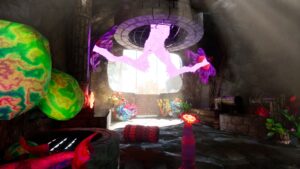
“Liquidus” is a first-person, narrative-driven, puzzle game set on an aqueous planet. The planet is in peril because the Solidus have destroyed the water geodes and left the inhabitants to dry up. As a last resort, the Liquidus aliens have abducted the “Plumber of the Universe”. As the plumber you must solve puzzles, repair pipes and traverse a rich alien landscape using ancient mechanical mechanisms left by the planet’s elders. Your goal is to restart the geode and ward off the Solidus, returning the planet back to peaceful harmony.
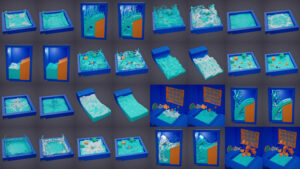
The player will navigate the complex cave geode under the watchful eye of the Liquidus aliens. To restart the geode, the player must redirect liquid to power water wheels, mechanical devices and push objects. The puzzles are accompanied by detailed fluid simulations. The fluid is implemented into engine using my own custom system which reduces the footprint of the simulations by up to 90%. This allows the fluid simulations to run efficiently on a range of hardware with little performance impact.
I created this work as part of my third year at university in response to an open-ended brief. I was tasked to create a playable game demo with custom mechanics and assets. Additionally, I have incorporated my dissertation into the project by testing the feasibility of the custom fluid storage system within a game environment. From a young age, I have loved fluid simulations and wanted to integrate them into a game; this project has allowed me to achieve this ambition.
This project has been a step up in the quality of my production capabilities. I have used my skills to create a realistic, large scale game environment where all aspects are created in house. This includes music, sound effects, models, textures and code.